
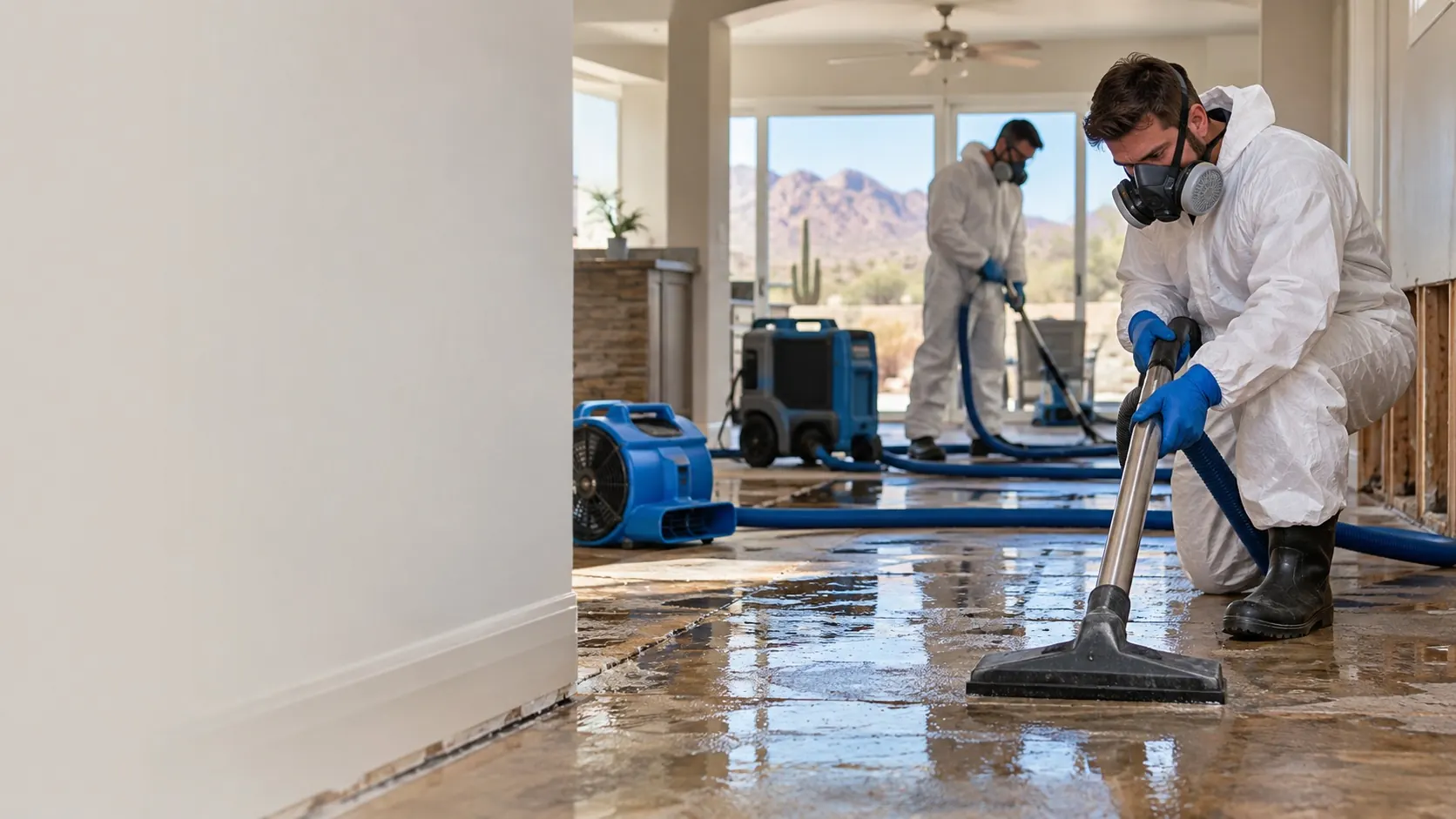
There is no single drying time that fits every water-damage job. Drying depends on the materials involved, how much water they absorbed, indoor conditions, access to wet areas and whether the water source has been fully controlled.
Material type matters
Drywall, framing, carpet, concrete, wood flooring and insulation all hold and release moisture differently.
The amount of water matters
A small localized leak can dry very differently from a room that experienced several inches of standing water.
Airflow and humidity affect progress
Drying equipment works by supporting evaporation and removing moisture from the air. Closed-off cavities may require a different approach.
Measurements are more useful than guesses
Moisture readings help determine whether materials are trending toward a dry condition and whether the drying setup needs adjustment.
Repairs should follow drying
Closing walls or replacing finishes too early can trap moisture. Repair decisions are better made after the affected area reaches an appropriate condition.
When professional help makes sense
Consider professional help when water is still entering, standing water covers a significant area, moisture has moved into walls or floors, the source may be contaminated, or the affected area cannot be dried safely with normal household ventilation.
Use the service page below for the next step rather than relying on general guidance when water is active or spreading.