
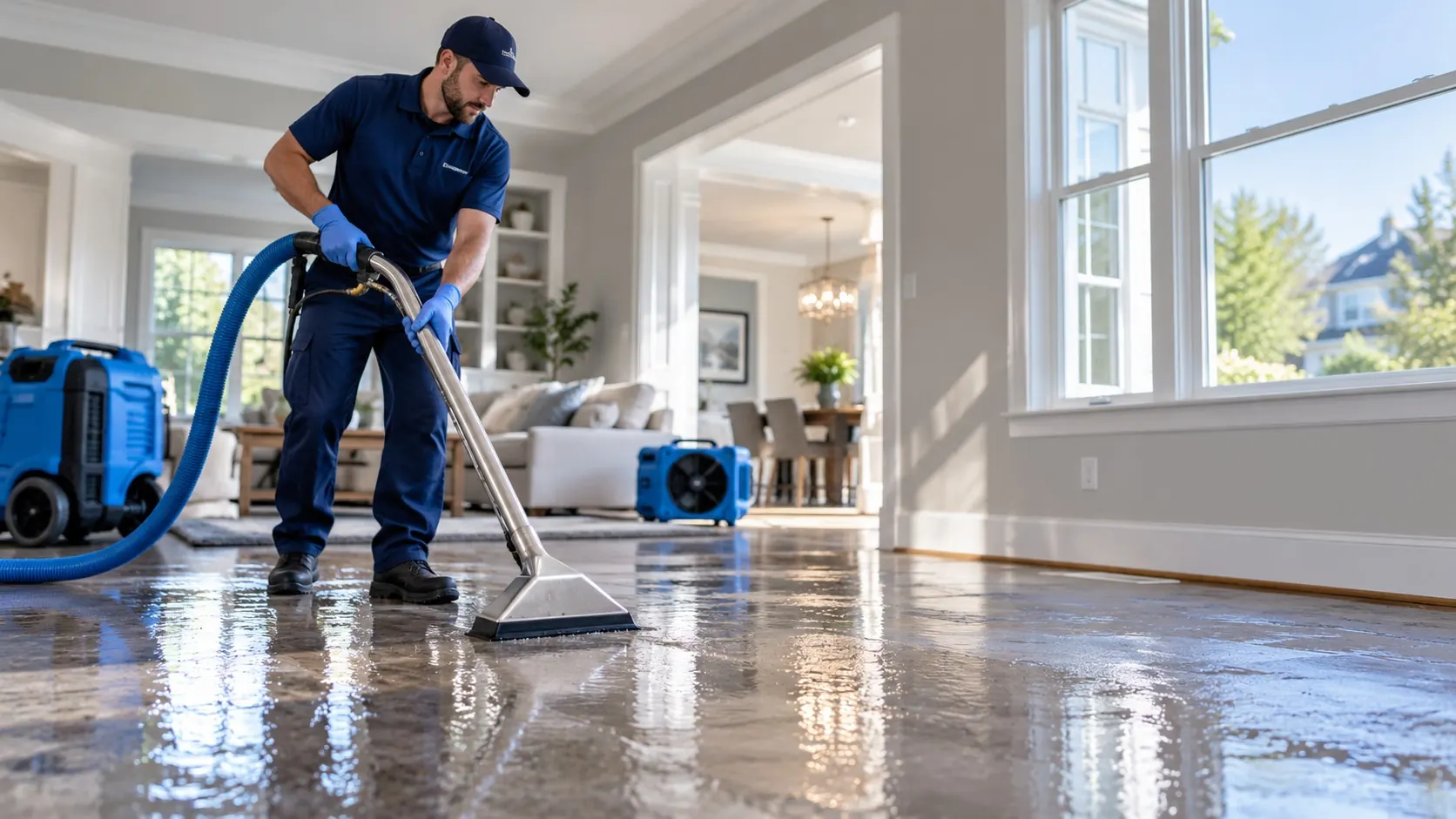
Water extraction is the bulk removal of standing water from floors and other surfaces. It is usually one of the first physical steps after the source is controlled, but it is not the end of the drying process.
Assessment comes first
The water source, amount of standing water, affected materials and potential contamination all influence the extraction approach.
Bulk water is removed
Extraction equipment is used to remove as much free water as practical from the affected area. Different tools may be used for hard floors, carpet and confined spaces.
Materials are checked for retained moisture
Even when the floor looks dry, moisture may remain under flooring, behind trim or within wall assemblies.
Drying equipment targets remaining moisture
Air movement and dehumidification are commonly used after extraction to reduce moisture held in building materials and indoor air.
Progress should be measured
Drying decisions should be based on actual moisture conditions rather than assuming an area is dry because a fixed amount of time has passed.
When professional help makes sense
Consider professional help when water is still entering, standing water covers a significant area, moisture has moved into walls or floors, the source may be contaminated, or the affected area cannot be dried safely with normal household ventilation.
Use the service page below for the next step rather than relying on general guidance when water is active or spreading.