
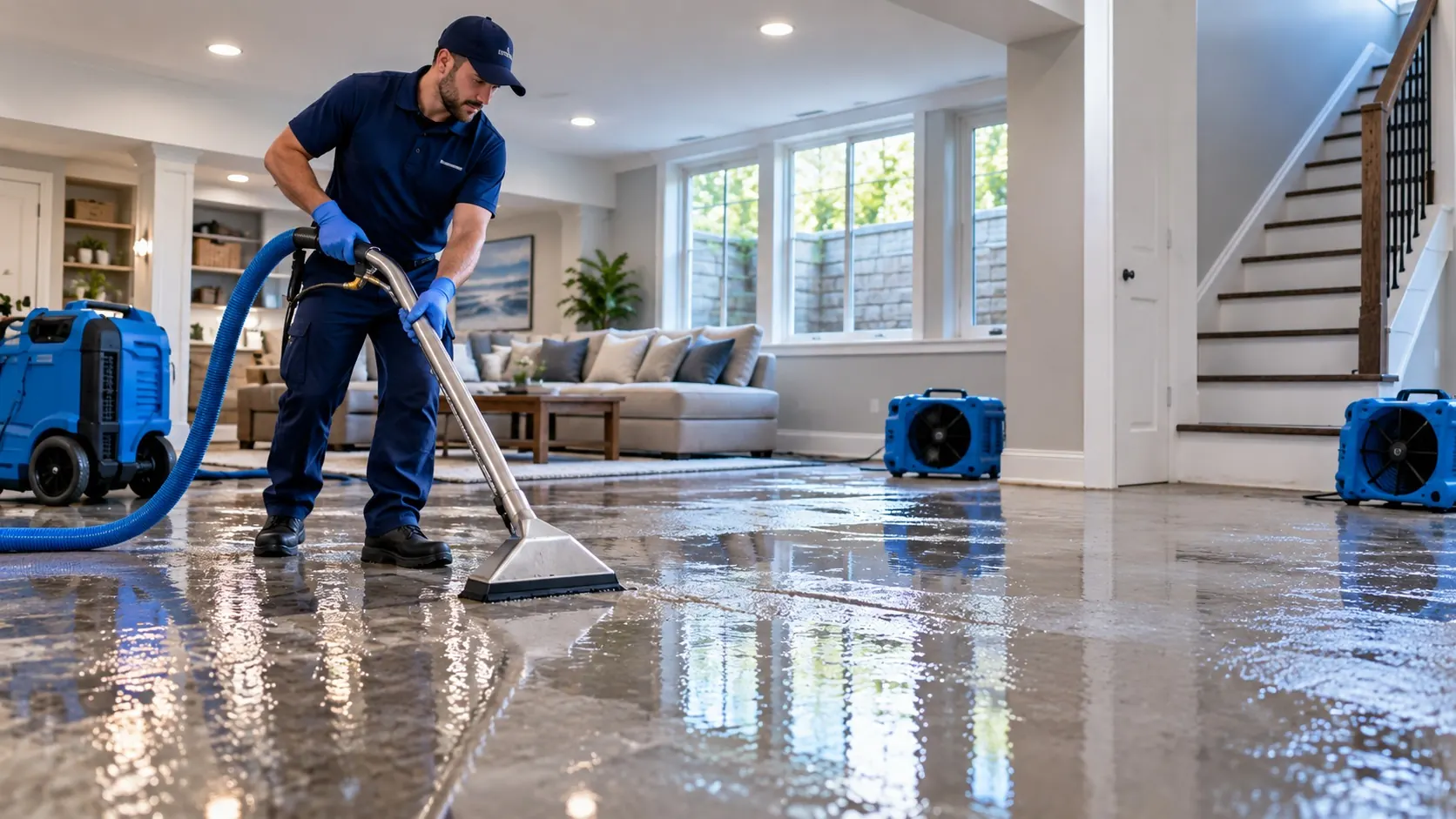
Basements and lower levels sit where plumbing, groundwater, runoff and drainage problems can all meet. The visible water may look similar, but finding the source is essential because a failed pipe requires a different fix from seepage after heavy rain.
Heavy rain and surface runoff
Water can collect around a foundation when rainfall exceeds drainage capacity or when grading and downspouts direct water toward the building.
Sump pump problems
A failed pump, loss of power, clogged discharge line or overwhelmed sump system can allow water to rise quickly in a lower level.
Plumbing and appliance leaks
Water heaters, laundry equipment, supply lines and basement plumbing can release clean water directly into finished or unfinished areas.
Foundation and wall seepage
Moisture can enter through cracks, joints or porous materials. Repeated dampness deserves attention even when there is no large standing-water event.
What to check after the water is found
Identify whether water is still entering, move belongings out of wet areas when safe, and check wall bases, flooring edges and adjacent spaces for spread.
When professional help makes sense
Consider professional help when water is still entering, standing water covers a significant area, moisture has moved into walls or floors, the source may be contaminated, or the affected area cannot be dried safely with normal household ventilation.
Use the service page below for the next step rather than relying on general guidance when water is active or spreading.