
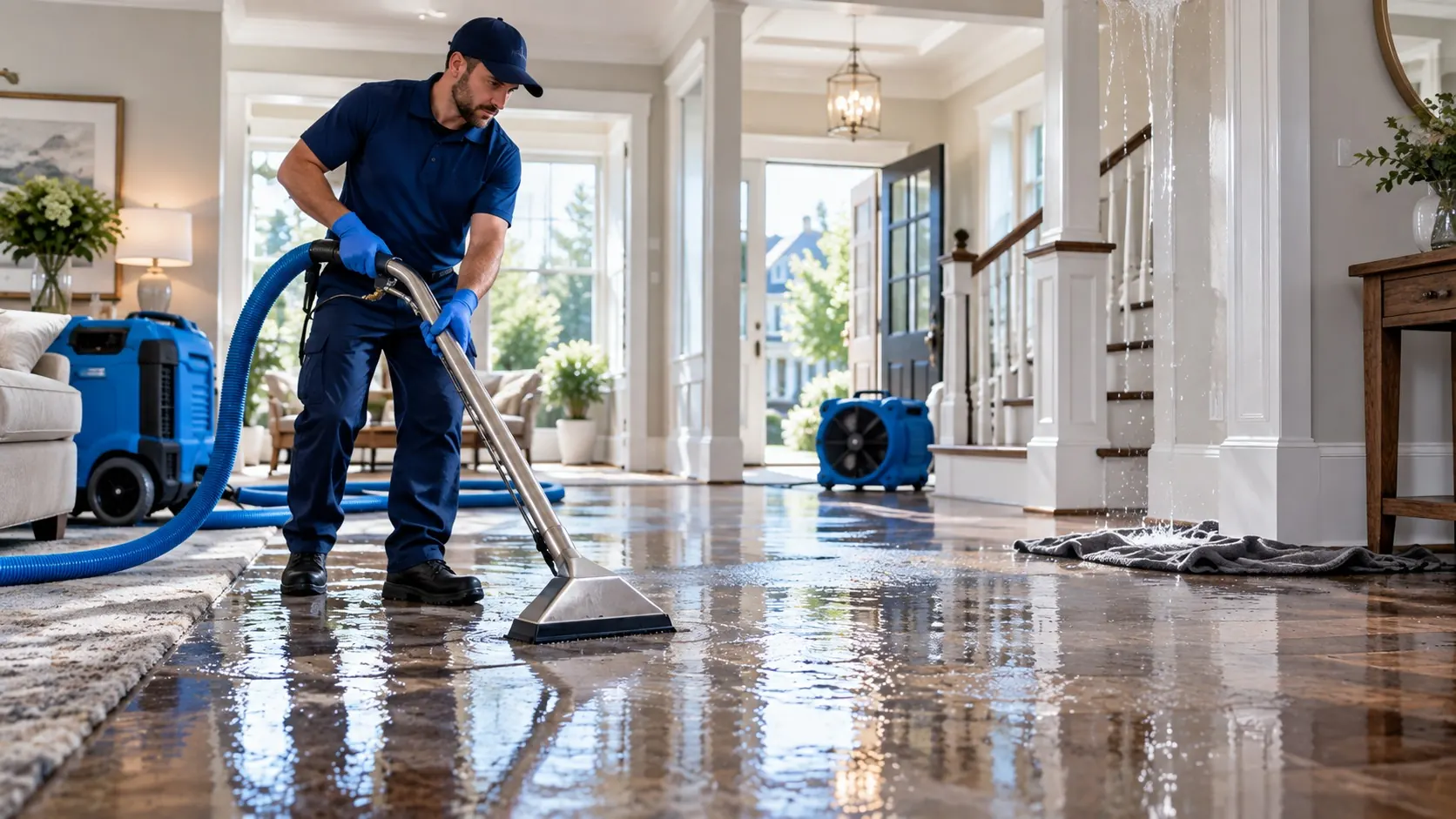
A burst or separated pipe can release a large amount of water in a short time. Fast source control matters, but safety comes first if water is near electrical systems, ceilings or other hazards.
Shut off the water when safe
Use a fixture shutoff or the main water supply if it can be reached without entering an unsafe wet area.
Protect people from electrical hazards
Keep away from standing water near outlets, lights, appliances, extension cords or electrical panels.
Move vulnerable items only if safe
Small electronics, documents and furniture can be moved out of the wet area when doing so does not expose you to hazards.
Check rooms below and beside the leak
Pipe water can travel through wall cavities, floor openings and ceilings, so inspect adjoining spaces for staining, dripping or dampness.
Begin extraction and drying
Standing water should be removed, followed by moisture assessment and drying of affected building materials.
When professional help makes sense
Consider professional help when water is still entering, standing water covers a significant area, moisture has moved into walls or floors, the source may be contaminated, or the affected area cannot be dried safely with normal household ventilation.
Use the service page below for the next step rather than relying on general guidance when water is active or spreading.