
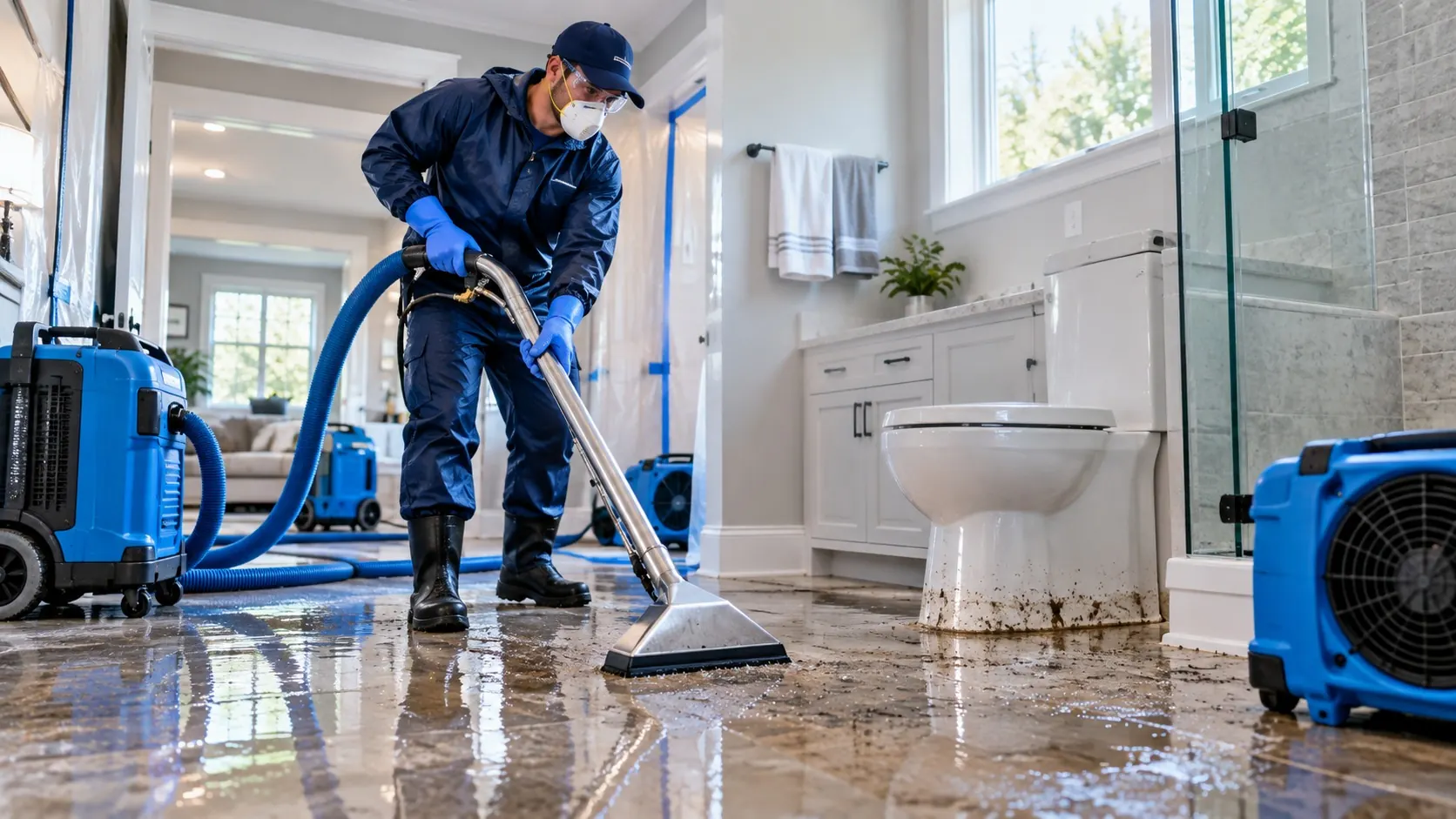
A sewer backup is different from a clean-water leak because the water may contain contaminants. The safest response is to limit exposure, keep the affected area isolated and avoid moving contaminated materials through clean parts of the property.
Keep people and pets away
Restrict access to the affected area. Avoid direct skin contact and do not allow children or animals into rooms with sewage-contaminated water.
Avoid spreading contamination
Do not carry wet rugs, boxes or other contaminated items through unaffected rooms unless they are properly contained.
Stop using connected fixtures if needed
If drains are backing up, continued use of sinks, toilets or appliances connected to the same system may make the problem worse until the source is identified.
Assess porous materials carefully
Carpet pad, insulation, drywall and other porous products may require different handling than hard nonporous surfaces after sewage exposure.
Clean, dry and restore in the right order
Contaminated water and affected materials should be addressed before normal structural drying and repair work proceeds.
When professional help makes sense
Consider professional help when water is still entering, standing water covers a significant area, moisture has moved into walls or floors, the source may be contaminated, or the affected area cannot be dried safely with normal household ventilation.
Use the service page below for the next step rather than relying on general guidance when water is active or spreading.