
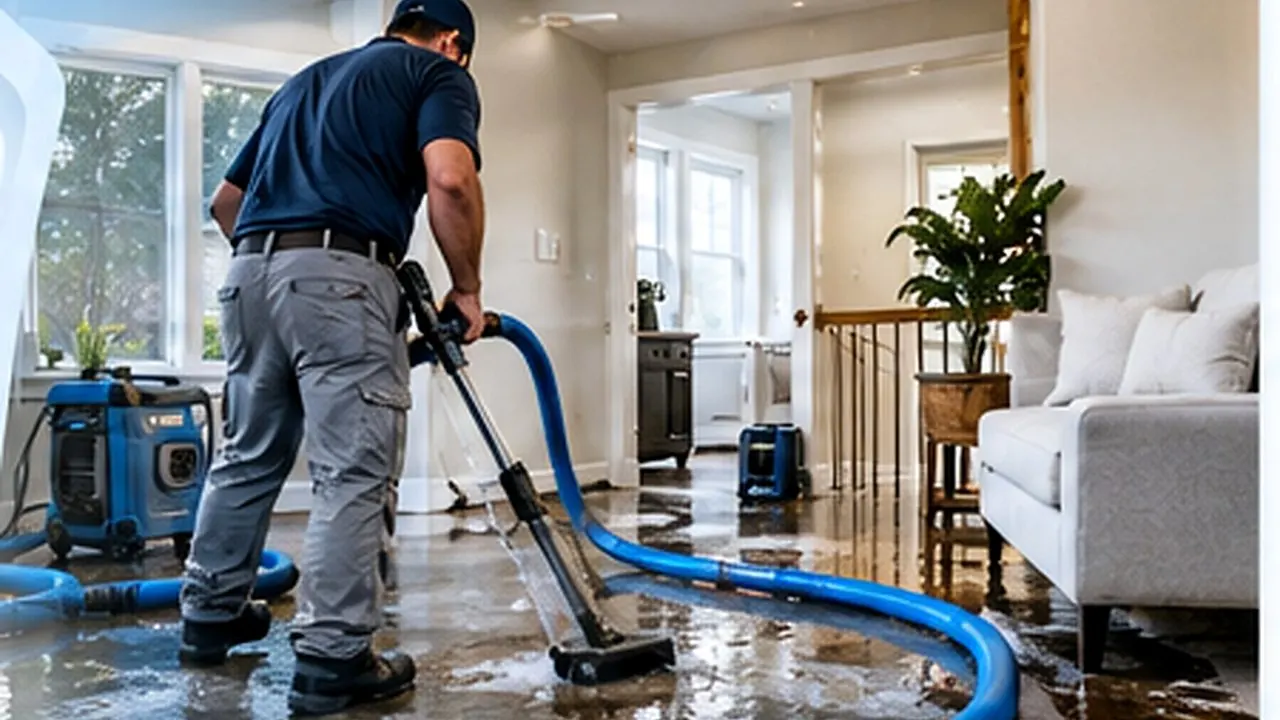
Water damage can move beyond the spot you can see, especially when water reaches flooring edges, wall cavities or rooms below. A good first response is calm and practical: protect people first, stop the source if it is safe, then determine how much of the property is affected.
1. Check for immediate safety concerns
Avoid standing water near electrical outlets, appliances, panels or damaged ceilings. If the source involves sewage or visibly contaminated water, keep people and pets out of the area and avoid direct contact.
2. Stop the water source when it is safe
A fixture valve, appliance supply line or main shutoff may stop clean-water leaks. Do not take risks around electricity, unstable ceilings or contaminated water just to reach a valve.
3. Identify where water has traveled
Look beyond the obvious puddle. Check adjoining rooms, baseboards, carpet edges, lower floors and ceilings below the leak. Water often follows seams and openings before it becomes visible.
4. Remove standing water and begin drying
Bulk water removal comes before targeted drying. The drying plan should match the materials involved and should be guided by moisture conditions rather than by surface appearance alone.
5. Document the affected areas
Photos and a basic record of what happened can help you track damaged materials and communicate clearly with a restoration provider, property manager or insurer if applicable.
When professional help makes sense
Consider professional help when water is still entering, standing water covers a significant area, moisture has moved into walls or floors, the source may be contaminated, or the affected area cannot be dried safely with normal household ventilation.
Use the service page below for the next step rather than relying on general guidance when water is active or spreading.